
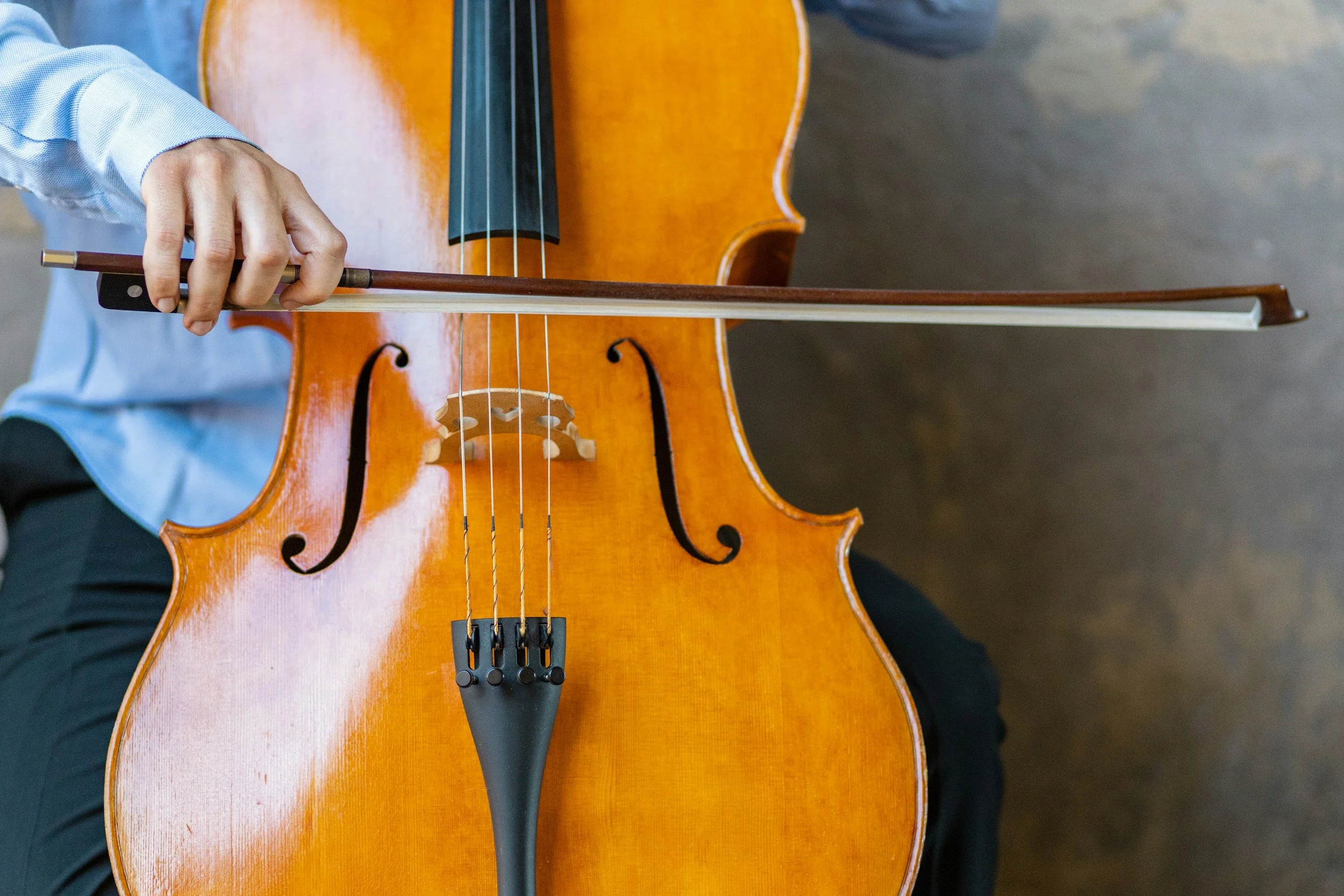
Over recent months, I've started teaching a small studio of cello students, and I have to say, I'm thoroughly enjoying it!
While the viola has always been my primary instrument and teaching focus, spending more time with the cello has been a wonderful new challenge. There's something particularly enjoyable about getting to know the instrument from a teaching perspective, exploring its repertoire and discovering different ways to help students develop their technique and confidence.
I've been having great fun working through some of the tried-and-true technical foundations of cello playing, particularly Louis R. Feuillard's 60 Studies of the Young Cellist, Hans Jørgen Jensen's Fun in Thumb Position, and, of course, scales and arpeggios.
Feuillard's 60 Studies is one of those collections that offers an enormous amount of value to a developing cellist. The studies are progressively arranged and cover a wonderful range of technical challenges, working on everything from left-hand coordination, intonation and finger independence to bow control, articulation and tone production. I particularly enjoy how the studies combine technical development with musical material. They provide students with something substantial to work on while gradually building the skills needed for more advanced repertoire. It's a fantastic resource for developing good habits and a more secure technical foundation.
I've also been enjoying introducing students to thumb position through Jensen's Fun in Thumb Position. Thumb position can sometimes feel like a rather intimidating milestone for developing cellists, but Jensen approaches it in such an accessible and imaginative way. Rather than simply presenting a series of technical exercises, the book encourages students to explore the fingerboard, develop a comfortable hand shape and become familiar with the upper register through a range of practical and engaging activities. I love its positive approach to what can otherwise be a challenging part of cello technique. Building confidence in the upper positions early on is such a valuable skill, and it's wonderful to see students become increasingly comfortable exploring this part of the instrument.
And then, of course, there are scales and arpeggios! They might not always be everyone's favourite part of a lesson, but I remain a firm believer in their importance. They provide the building blocks for so much of what we do as musicians, helping to develop familiarity with keys, intonation, finger patterns and an understanding of the instrument's geography. There's always something to discover, even in the most familiar exercises.
It's been a fun and rewarding new direction for me. I am enjoying the opportunity to approach the cello from a teaching perspective, and it's been a lovely reminder that teaching is also an opportunity to keep learning yourself.
Most importantly, my students are progressing, enjoying their lessons and embracing the challenges along the way. As a teacher, that's really all you can ask for!
I'm looking forward to seeing where this little cello studio goes. There's plenty more to explore, and we're having a great time along the way!
